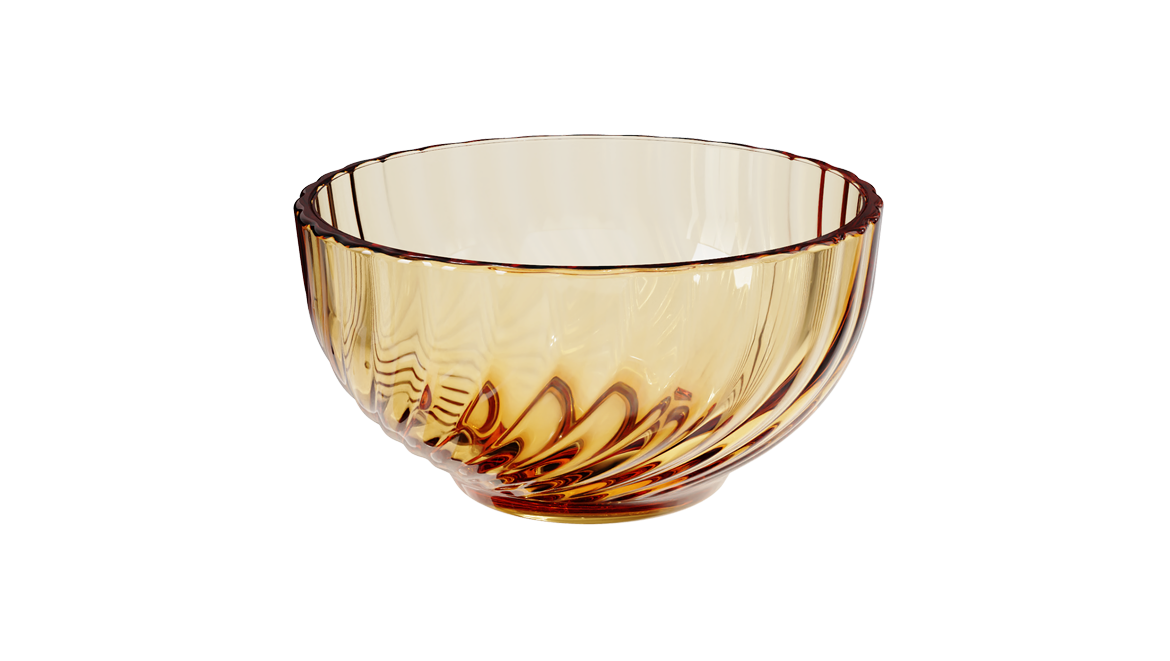
Why We Reviewed the Glass Body Composition
Material information is an important part of evaluating glassware for wholesale, retail and brand sourcing.
Two glass bowl samples were submitted by Baoji Yucai Glass Bottle Manufacturing Co., Ltd. to Foshan Ceramics Research Institute Testing Co., Ltd. for chemical composition analysis in August 2024.
The two reports provide representative composition data for the borosilicate glass bodies used across our current glassware range.
Report O3066/H240809-010 was issued on 14 August 2024. Report O3066/H240809-011 was issued on 13 August 2024.
The Main Reported Components
The two samples produced closely comparable results. The main reported component ranges were:
Silicon dioxide (SiO₂): 77.71% to 78.75%
Boron oxide (B₂O₃): 12.47% to 13.34%
Sodium oxide (Na₂O): 4.76% to 4.80%
Aluminium oxide (Al₂O₃): 2.14% to 2.18%
Cerium oxide (CeO₂): 0.81% to 0.82%
Titanium dioxide (TiO₂): 0.62% to 0.67%
The reported loss on ignition at 700°C was below 0.05% in both samples.
Other measured constituents were reported in smaller amounts or below the reporting limits stated in the reports.
Additional Reported Results
Iron oxide (Fe₂O₃) was reported at 0.04% in both samples.
Calcium oxide (CaO) was reported between 0.04% and 0.07%, while magnesium oxide (MgO) was reported at 0.02%.
Potassium oxide (K₂O) was reported between 0.08% and 0.10%. Manganese oxide (MnO) was reported at 0.05%.
Zirconium and hafnium oxide, expressed as Zr(Hf)O₂, was reported between 0.09% and 0.13%.
Lead oxide (PbO) and cadmium oxide (CdO) were each reported below 0.01% in both samples.
These figures describe the measured chemical composition of the submitted glass samples. They should not be interpreted as migration test results or as a complete finished-product compliance assessment.
What the Composition Tells Buyers
The results document a glass formulation with a high proportion of silica and a substantial boron oxide content. These are the principal reported components of the borosilicate glass bodies used in our collection.
The close composition ranges between the two tested samples also provide useful representative information for buyers reviewing the base glass material.
Chemical composition is only one part of product evaluation. Product shape, wall thickness, manufacturing conditions, finishing, accessories and intended use must also be considered when selecting a product.
Scope Across Our Glassware Range
Our manufacturing team confirms that this glass-body material composition is used across the glassware range presented by our company.
The original laboratory reports state that their results apply to the submitted samples. We therefore present the two reports as representative material-composition evidence for our glass bodies, together with our manufacturing material confirmation.
Buyers requiring documents for a particular product, order or destination market should provide the relevant product codes so that the applicable documentation can be reviewed.
Glass Bodies and Accessories Are Different
The composition information in these reports applies only to the glass body.
It does not apply to lids, seals, valves, handles, coatings, printing, decorative parts or other accessories. These components may use different materials and must be evaluated separately.
A material statement or test result for the glass body should not be treated as a report covering the complete container and all of its accessories.
What These Reports Do Not Establish
The reports cover chemical composition analysis of the submitted glass samples.
They do not by themselves establish food-contact migration performance, thermal-shock resistance, mechanical impact strength, oven suitability, microwave suitability, dishwasher suitability or compliance with every destination market.
These requirements may require separate product information, test methods or supporting documents.
Information Available for Your Product Selection
When contacting us, please share:
The product codes you are considering
The intended application
The destination country or market
The required testing or documentation
The materials or accessories that need to be covered
Our export team will review the request with the manufacturing team and confirm which reports or additional checks are applicable to the selected product.
A Clearer Way to Review Materials
Publishing material information helps buyers understand what is being tested and what remains product-specific.
For our glassware, the reported composition provides representative information about the borosilicate glass body. Lids and other accessories remain separate components and should always be reviewed according to their own materials and intended use.